
Proven Real Estate Lead Follow Up Strategies That Convert
Transform inquiries into clients with systematic real estate lead follow up strategies. Call 510-663-7016 to discuss implementing a proven nurture system.

By Maren Silverbrook
You spent time and money generating that lead. Now, the real work begins. In real estate, the fortune is in the follow up. A staggering number of deals are lost not because the lead wasn’t qualified, but because the agent failed to nurture the relationship with consistent, valuable communication. This gap between initial contact and closed deal is where careers are made and commissions are earned. Mastering real estate lead follow up strategies is the single most impactful skill you can develop, transforming cold inquiries into loyal clients and predictable revenue.
The Foundation: Building a System, Not Just Sending Emails
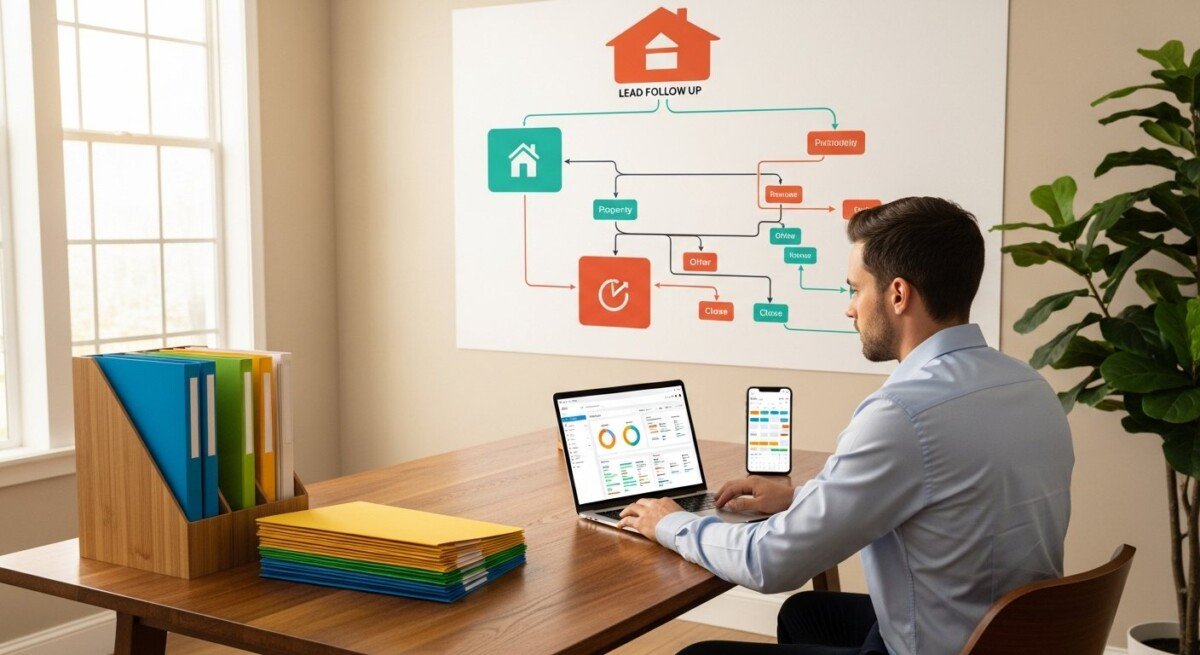
Effective follow up is not a sporadic activity, it is a deliberate system. Before you send a single text, you must have a framework in place. This begins with immediate lead capture and categorization. The moment a lead comes in, whether from your website, a social media ad, or an open house, their information should be instantly entered into your Customer Relationship Management (CRM) system. This is non-negotiable. A CRM is the engine of your follow up machine, allowing you to track interactions, set reminders, and automate sequences.
Next, segment your leads. Not all leads are created equal. A hot buyer who needs to move in 30 days requires a different follow up cadence than a seller who is just beginning to research market conditions. Create basic categories such as Hot Buyer, Warm Buyer, Future Seller, and Past Client. This segmentation allows you to tailor your messaging and frequency, making your communication more relevant and less intrusive. Without a system, leads slip through the cracks. With one, every lead has a clear path to conversion.
Crafting a Multi-Channel Follow Up Sequence
Relying on a single communication channel is a recipe for missed connections. People have preferences: some live in their email, others in text messages, and many are responsive on social media. Your follow up strategy must be omni-channel, creating multiple touchpoints across different platforms. The goal is to be helpful, not annoying, and to provide value with every interaction.
The sequence should begin within minutes. The first 10 minutes after a lead submits their information are the most critical. An instant, automated response acknowledging their inquiry and setting expectations (e.g., “Thanks for your interest, I’ll call you within the hour”) builds immediate trust. This should be followed by a personal phone call. If you don’t reach them, leave a concise, friendly voicemail and send a text message introducing yourself. This multi-pronged initial contact significantly increases your connection rate.
For a comprehensive look at where these leads originate, review our analysis of the top lead sources for real estate agents to better understand their context.
The Power of Value-First Communication
What you say in your follow up is as important as how quickly you say it. Generic messages like “Just checking in” are ineffective and can damage your credibility. Every touchpoint must offer tangible value. This shifts the dynamic from a salesperson chasing a client to an expert providing useful resources. Your communication should answer the question, “What’s in it for them?”
For buyers, value can be a curated list of new listings that match their criteria, a video walkthrough of a neighborhood, or a guide on the mortgage pre-approval process. For sellers, it could be a comparative market analysis (CMA) of their street, a report on recent sales in their area, or tips on home staging. By leading with value, you position yourself as a knowledgeable advisor, not just another agent. This approach builds know, like, and trust, which are the essential ingredients for winning business.
Consider implementing a structured sequence that blends different types of content. Here is an example framework for a warm lead:
- Day 1 (Immediate): Auto-responder email with a helpful guide (e.g., “First-Time Buyer Checklist”) and a personal call/text.
- Day 3: Follow-up email with a personalized video message discussing a specific property or market trend they showed interest in.
- Day 7: Share a relevant blog article or news piece about local market conditions, adding a brief personal note.
- Day 14: Invite them to an upcoming virtual webinar you’re hosting on “Understanding Market Shifts.”
- Day 21+ (Nurture): Add them to a monthly newsletter with high-value market insights and community highlights.
This systematic, value-driven approach ensures you stay top-of-mind in a helpful way.
Leveraging Technology for Consistency and Scale
Manually tracking dozens of leads across different stages is impossible at scale. Technology is the force multiplier for your real estate lead follow up strategies. Your CRM should be configured to automate the bulk of your nurturing sequences while allowing for personalization. Email drip campaigns, SMS workflows, and task reminders ensure no lead is forgotten.
Use tools to add a personal touch efficiently. Video messaging platforms allow you to send quick, personalized video emails that have dramatically higher engagement rates than text alone. Scheduling tools integrated with your calendar make it easy for leads to book appointments directly, eliminating phone tag. Furthermore, analytics within your CRM will show you which leads are most engaged (e.g., opening emails, clicking links), allowing you to prioritize your hottest prospects. The key is to use technology to handle the repetitive tasks, freeing you to focus on the high-touch, personal interactions that close deals.
Overcoming Common Follow Up Obstacles
Even with a great system, agents face psychological and practical hurdles. The fear of being perceived as pushy often leads to under-communication. Remember, if you provided genuine value, your follow up is a service, not a nuisance. Another obstacle is the “unresponsive lead.” When a lead goes cold, avoid the temptation to give up or become passive-aggressive. Instead, change your approach. Send a break-up email: “Hi [Name], I haven’t heard back from you regarding your home search. I’ll assume your timeline has changed or you’ve found another resource. I’ll close your file for now, but please don’t hesitate to reach out if I can help in the future.” This surprising tactic often re-engages leads because it removes pressure and demonstrates professionalism.
Persistence is measured in months and years, not days. Many transactions happen 6, 12, or 18 months after the initial inquiry. Your nurturing system must be designed for the long game, consistently providing value to stay at the forefront when the lead is finally ready to act. For insights on generating a steady stream of leads to feed this system, explore our strategic guide to generating real estate leads.
Measuring Success and Refining Your Approach
You cannot improve what you do not measure. Key performance indicators (KPIs) for your follow up efforts are essential. Track metrics such as lead response time, connection rate (calls answered vs. made), email open/click-through rates, and most importantly, conversion rate from lead to appointment and from appointment to closed transaction. Analyze which follow up sequences yield the highest conversion. Is it the sequence that starts with a video? The one that uses more text messages?
Regularly audit your process. Are you consistently inputting leads into the CRM? Are your automated emails still relevant? Is your content providing value? By treating your follow up strategy as a living system that requires data-driven refinement, you ensure continuous improvement and maximum return on your lead generation investment. Choosing the right tools and partners is part of this optimization, which is why evaluating your real estate leads provider for your business is a critical ongoing consideration.
Frequently Asked Questions
How soon should I follow up with a new lead? Ideally, within 5-10 minutes. The faster you respond, the higher your chance of engagement. Studies show contacting a lead within the first hour increases conversion likelihood by 7x compared to waiting even an hour longer.
How many times should I follow up before giving up? The industry benchmark is often 8-12 touchpoints across different channels, but “giving up” is the wrong mindset. Shift to a long-term nurture strategy. After an initial intensive sequence (2-3 weeks), move the lead into a monthly value-based newsletter or content drip that keeps you top-of-mind indefinitely.
What is the best channel for follow up? There is no single best channel. The most effective strategy uses a combination: phone for personal connection, text for quick updates and scheduling, email for delivering detailed value, and social media for passive relationship building. Use your CRM to track which channel each lead prefers.
How can I make my follow up feel less salesy? Lead with education and empathy. Focus 80% of your communication on providing useful information, market insights, and answers to common questions. Only 20% should be a direct call to action (e.g., scheduling a meeting). Become a source of value first, a salesperson second.
What should I do if a lead says they aren’t ready? Thank them for their honesty. Ask permission to add them to your monthly newsletter for market updates, and schedule a gentle check-in in 3-6 months. This respects their timeline while keeping the door open for future business.
Mastering real estate lead follow up is not about employing a single clever trick. It is the disciplined execution of a structured, value-driven, and persistent communication system. It transforms your business from a reactive operation into a predictable pipeline. By implementing these strategies, you stop chasing leads and start cultivating clients, building a sustainable practice where your past and present efforts consistently feed your future success. The agents who commit to this process don’t just win more deals, they build lasting legacies in their markets.