
How to Generate and Convert Home Buyer Leads in 2026
Master the strategies to attract and convert qualified home buyer leads for a thriving real estate business. For expert guidance, call 510-663-7016.

By Rowan Nightmoor
For real estate agents and mortgage professionals, a consistent pipeline of qualified home buyer leads is the lifeblood of a thriving business. Yet, the landscape of lead generation is shifting rapidly, moving beyond simple list purchases to sophisticated, value-driven strategies. The agents and loan officers who will dominate the market in 2026 are those who master not just the art of attraction, but the science of conversion. This comprehensive guide delves into the modern methodologies for acquiring, nurturing, and converting home buyer leads, transforming your pipeline from a trickle of inquiries into a steady stream of closed deals.
Understanding the Modern Home Buyer Lead
Before investing in any lead generation tactic, it is crucial to define what constitutes a quality lead in today’s market. A home buyer lead is more than just a name and an email address. It is an individual or household who has demonstrated a clear intent to purchase a property within a specific timeframe and has provided enough information for you to initiate a professional, personalized follow-up. The key distinction lies in intent and data quality. A lead who simply downloaded a generic mortgage calculator might be at the very top of the funnel, while someone who requested a pre-approval for a specific neighborhood is much further along. Understanding this spectrum allows you to tailor your approach and allocate resources effectively, ensuring you are not wasting time on tire-kickers or chasing unqualified prospects.
The quality of your home buyer leads directly impacts your conversion rate, time investment, and overall profitability. High-intent leads, often sourced from specific actions like applying for a rate quote or attending a first-time homebuyer webinar, are significantly more valuable than cold, purchased lists. They represent a warmer prospect who is already engaged in the process. To assess lead quality, consider factors such as the source of the lead, the specificity of their request, the recency of their activity, and the depth of information provided. A robust lead nurturing system is essential for moving leads through this funnel, a topic we explore in depth in our guide on effective lead nurturing systems for sustained growth.
Strategic Sources for High-Quality Leads
Diversifying your lead sources mitigates risk and creates a more resilient pipeline. The most successful professionals blend organic, relationship-based strategies with targeted paid acquisition. Relying on a single source, such as referrals or one online platform, leaves your business vulnerable to market shifts. A multi-channel approach ensures a steady flow of prospects from various entry points into your sales funnel.
Organic and relationship-based strategies form the foundation of a sustainable business. This includes cultivating a powerful referral network from past clients, local realtors, and financial advisors. Simultaneously, building a strong personal brand through valuable content on social media platforms like LinkedIn, Instagram, and Facebook positions you as a local expert. Creating SEO-optimized content on your website, such as neighborhood guides or explanations of the mortgage process, attracts buyers who are actively searching for information. While powerful, these methods often require significant time to yield results.
For more immediate and scalable results, targeted paid acquisition and lead providers can be highly effective. Pay-per-lead (PPL) services connect you with consumers who have recently expressed buying intent. The critical factor here is vetting the provider for data quality and verification processes. Similarly, targeted social media advertising (Meta, Google, YouTube) allows for precise demographic and behavioral targeting. You can run campaigns aimed at people in your market who have recently visited real estate sites or have life events indicating a potential move. For hyper-local focus, consider strategies similar to those outlined for generating mortgage leads in Dallas, which emphasize geo-targeting and local market expertise.
Evaluating Lead Generation Partners
If you choose to work with a lead generation company, due diligence is non-negotiable. Not all leads are created equal. You must ask pointed questions about their sourcing methods. Are leads generated through co-registration on unrelated websites, or through direct actions on real estate and finance portals? Inquire about their verification process. The highest quality providers use multiple points of verification, such as email, phone, and sometimes even credit prescreening, to ensure the lead is genuine and engaged. Understanding these nuances is key, as detailed in our resource on email-verified mortgage leads and their impact on conversion.
The Conversion Framework: From Lead to Client
Acquiring the lead is only the first step. The real work, and where most businesses fail, is in the conversion process. A systematic follow-up framework is what separates top producers from the rest. This framework must be fast, personalized, and multi-channel. The goal of initial contact is not to close the deal on the first call, but to establish rapport, demonstrate value, and schedule a substantive conversation.
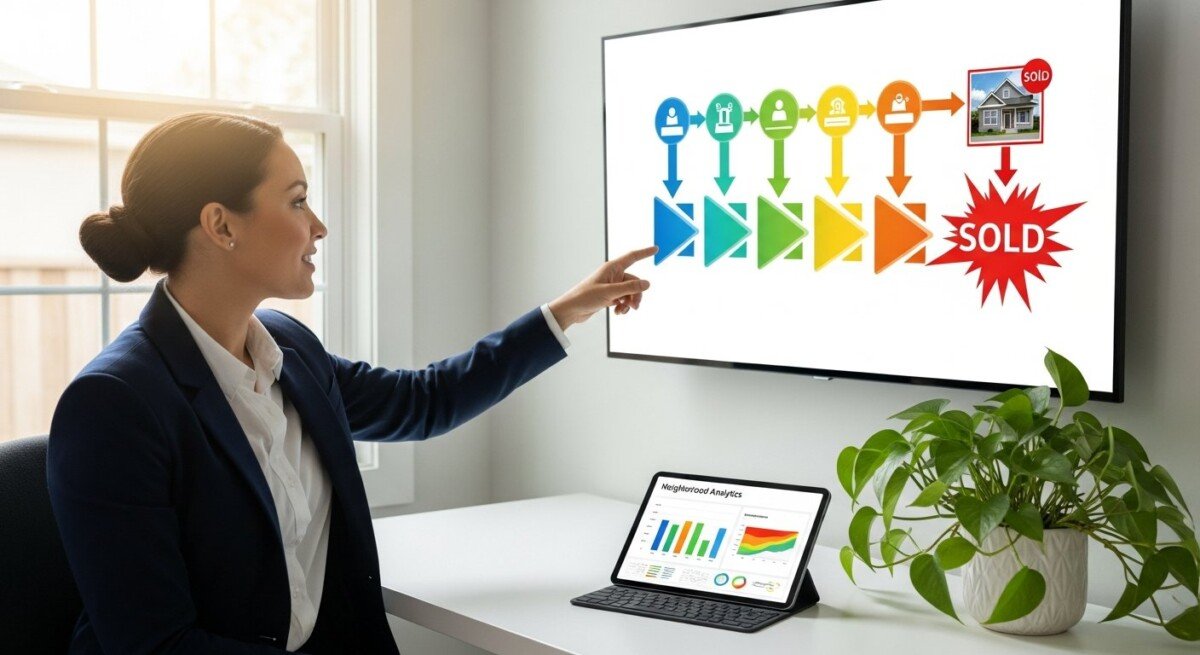
The first 10 minutes after receiving a lead are the most critical. Response time is the single biggest factor in lead engagement. Your process should be automated to trigger an immediate, personalized acknowledgment. This could be a text message and an email. The follow-up sequence should then incorporate multiple touchpoints across different channels. Here is a proven multi-touch sequence for new home buyer leads:
- Immediate (Under 5 minutes): Send a personalized text message introducing yourself and confirming you received their inquiry.
- Within 1 hour: Make a phone call. If no answer, leave a concise, friendly voicemail and send a detailed follow-up email with valuable initial information.
- Day 2-3: Send a second email with additional resources, such as a link to a relevant blog post or a video about the local market.
- Day 5: Make a second phone call attempt.
- Ongoing: Add the lead to a longer-term nurturing sequence with monthly market updates, helpful tips, and check-in emails.
Personalization is the key that unlocks trust. Reference specific details from their initial inquiry, the property they viewed, or their preferred neighborhood. Use a CRM (Customer Relationship Management) tool to track all interactions, set reminders for follow-ups, and segment your leads based on their profile and behavior. This allows you to tailor your communication, sending first-time homebuyer content to one segment and investment property information to another.
Measuring Success and Optimizing Your Funnel
You cannot improve what you do not measure. To ensure your investment in home buyer leads is profitable, you must track key performance indicators (KPIs) at every stage of the funnel. This data-driven approach allows you to identify bottlenecks, double down on what works, and cut what doesn’t. The primary metrics to monitor include lead cost, contact rate, appointment set rate, and ultimate conversion to closed transaction.
Calculate your cost per lead (CPL) for each source by dividing your total spend by the number of leads generated. Then, track what percentage of those leads you successfully make contact with (contact rate). Of those contacted, how many schedule a meaningful consultation or appointment (appointment set rate)? Finally, what percentage of appointments turn into closed deals (close rate)? By analyzing these metrics, you can calculate your true cost per acquisition (CPA) and return on investment (ROI). For instance, if a lead source has a low CPL but an abysmal contact rate, the leads are likely low quality. Conversely, a source with a higher CPL but a stellar close rate may be your most profitable channel. This analytical approach is fundamental to any serious lead acquisition cost analysis.
Frequently Asked Questions
What is the best source for home buyer leads?
There is no single “best” source. The optimal mix depends on your market, budget, and expertise. A combination of referrals, personal branding, and a carefully vetted paid lead service often yields the best results. Test different channels, measure their performance rigorously, and allocate more budget to the sources that deliver the highest quality leads and best conversion rates.
How quickly should I follow up with a new lead?
Immediately. The odds of contacting a lead decrease dramatically after the first 5 minutes. Ideally, you should make first contact via text or phone within 5-10 minutes of receiving the lead. An automated initial email is good, but a personal touch via text or call is far more effective.
How can I improve my lead conversion rate?
Focus on speed, personalization, and providing immediate value. Respond faster than your competitors. Use the information the lead provided to personalize your communication. Offer a specific next step, such as a brief phone consultation to answer their pressing questions, rather than a generic “let me know if you have questions.”
Are purchased mortgage leads worth it?
They can be, but only if you do your homework. The value lies entirely in the quality of the leads and your ability to convert them. Invest in leads from reputable providers with strong verification processes, and ensure you have a robust, speedy follow-up system in place before you spend a dollar. Treat them as an introduction, not a guaranteed sale.
How many leads do I need per month?
This is a function of your closing ratio and sales goals. If your goal is 4 closings per month and you close 20% of the leads you make contact with, you would need to make quality contact with approximately 20 leads per month. If your contact rate is 50%, you would need to generate about 40 raw leads per month to hit your target. Work backwards from your income goal to determine your required lead volume.
Mastering the art and science of home buyer leads is an ongoing process of adaptation and refinement. The market, technology, and consumer behavior will continue to evolve. By building a diversified sourcing strategy, implementing a relentless conversion framework, and rigorously measuring your results, you build a business that is not dependent on any single channel or market condition. The future belongs to those who can systematically attract and guide potential buyers from their first online search to the closing table.