How to Generate and Convert Home Purchase Leads in 2026
In the competitive world of real estate and mortgage lending, your pipeline is only as strong as the leads you put into it. Home purchase leads represent the lifeblood of growth for agents, loan officers, and brokers, yet the process of consistently attracting and converting qualified prospects remains a significant challenge. The landscape of lead generation is shifting rapidly, moving beyond simple list buys and generic online forms. Success now hinges on a strategic, multi-channel approach that prioritizes quality, intent, and systematic nurturing. This article provides a comprehensive framework for building a sustainable stream of home purchase leads, turning casual inquiries into closed deals and driving measurable business growth.
Understanding the Modern Home Purchase Lead
Before investing time and resources into acquisition, it’s crucial to define what constitutes a valuable lead in today’s market. A home purchase lead is any individual or household that has expressed interest in buying a property and has provided contact information, but has not yet engaged an agent or secured financing. Not all leads are created equal. The key differentiator is intent and qualification. A lead who has been pre-approved for a mortgage and is actively touring homes is vastly more valuable than a casual browser who downloaded a generic market report. The modern consumer is informed, often conducting months of online research before ever speaking to a professional. Your strategy must account for this extended digital journey, providing value at each stage to build trust and position yourself as the indispensable guide.
Effective lead generation starts with understanding the lead’s point of origin and their specific needs. For a deeper dive into foundational tactics, our resource on how to generate and convert home purchase real estate leads explores core methodologies. Leads can be broadly categorized as inbound (coming to you through your marketing) or outbound (proactively sourced by you). Each category requires a different approach. Inbound leads, often generated through SEO, content marketing, or social media, typically have higher engagement but may need more education. Outbound leads, sourced from targeted advertising or referrals, allow for more precise targeting but require a compelling value proposition to initiate contact.
Building a Multi-Channel Lead Generation Engine
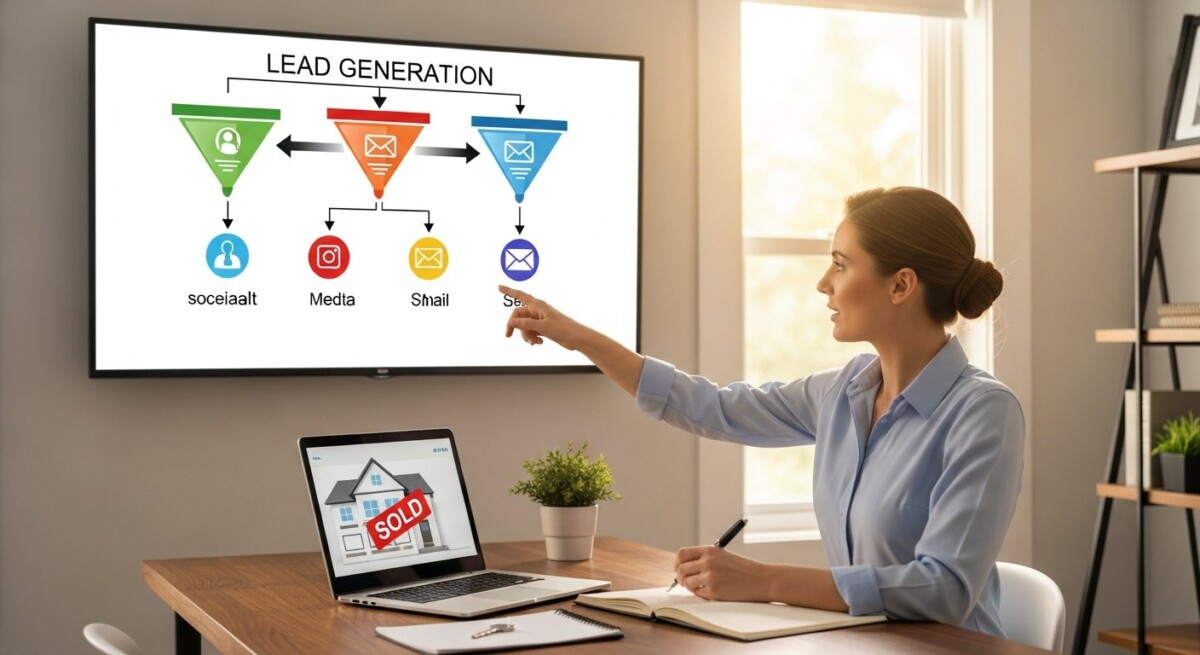
Relying on a single source for leads is a high-risk strategy. A robust engine leverages multiple channels to create a consistent, weatherproof flow. This involves both organic, long-term plays and targeted, paid efforts. The goal is to create multiple touchpoints where potential buyers encounter your brand, building familiarity and authority over time.
First, establish a dominant online presence through search engine optimization (SEO). This means creating high-quality, locally-focused content that answers the specific questions home buyers in your market are asking. Think beyond “homes for sale” and target informational intent with topics like “first-time homebuyer programs in [Your City]” or “comparing fixed vs. adjustable-rate mortgages.” A strong SEO foundation ensures you are visible at the very moment a prospect begins their research. Second, harness the power of paid social media advertising. Platforms like Facebook and Instagram offer unparalleled targeting capabilities, allowing you to reach audiences based on life events, income, interests, and behaviors indicative of an upcoming move. Retargeting website visitors with tailored ads keeps your brand top-of-mind.
Third, do not underestimate the enduring power of a referral network. This includes not just past clients, but also local realtors, financial planners, and attorneys. A structured referral program with clear incentives can become your most reliable source of high-intent leads. Finally, consider strategic partnerships with complementary businesses and explore niche marketing to specific demographics, such as physicians, veterans, or real estate investors. Each channel feeds into a centralized system where leads are captured and managed.
The Critical Shift: From Capture to Conversion
Generating a lead is only the first step. The vast majority of potential business is lost in the gap between initial contact and sustained engagement. A conversion-focused system is designed to bridge this gap through immediate response and structured follow-up. The moment a lead submits their information, a clock starts ticking. Studies show that contacting a lead within five minutes versus thirty minutes increases the likelihood of qualification by multiples.
An effective conversion framework includes several key components. First, implement an instant response mechanism, such as an automated text message or immediate email confirmation, acknowledging their inquiry and setting expectations. Second, have a human make personal contact as soon as possible, ideally via phone. This first call should be consultative, not salesy, focused on understanding their needs, timeline, and motivation. Third, segment your leads based on their readiness and profile. A lead looking to buy in 3 months requires a different nurturing sequence than one pre-approved and looking now.
To systematically improve your results, you must track key performance indicators (KPIs) at every stage. Essential metrics to monitor include:
- Lead Source: Which channel generates the most leads? The most qualified leads?
- Cost Per Lead (CPL): The average cost to acquire a lead from each channel.
- Initial Contact Rate: The percentage of leads you successfully make first contact with.
- Lead-to-Appointment Ratio: How many leads agree to a formal consultation or meeting.
- Appointment-to-Close Ratio: Your ultimate conversion efficiency.
By analyzing this data, you can double down on what works and eliminate wasteful spending. This analytical approach is fundamental to managing your lead acquisition cost and maximizing return on investment.
Implementing a Lead Nurturing System That Builds Trust
Many home purchase leads are not ready to buy immediately. A nurturing system is a planned series of communications designed to educate, build rapport, and position you as the expert, so you are the first person they call when they are ready to act. This process moves leads gently through the sales funnel without pressure. Email marketing is the backbone of most nurturing systems, but it should be supplemented with phone calls, text messages, and valuable content shared via social media.
Your email sequences should provide undeniable value. Avoid bland market updates. Instead, send personalized content that addresses the lead’s specific situation. For a first-time buyer, this could be a guide on understanding closing costs or a video walkthrough of the inspection process. For an investor, it might be an analysis of neighborhood rental yields. The content should establish your expertise and demonstrate that you understand their unique challenges. Marketing automation tools can help personalize these journeys based on lead behavior, such as which properties they viewed on your website or what content they downloaded.
Consistency is paramount. A lead who receives valuable, relevant information every week for three months is far more likely to remember and trust you than a lead who receives a sporadic, sales-oriented call every six weeks. The nurturing process is where relationships are built, and in a relationship-based business like real estate, that relationship is the ultimate competitive advantage. Effective nurturing directly impacts your ability to grow your loan portfolio or real estate sales volume through repeat and referral business.
Frequently Asked Questions
What is the best source for home purchase leads?
There is no single “best” source. The most sustainable strategy combines organic SEO for long-term visibility, targeted paid advertising for immediate reach, and a solid referral program for high-quality, warm leads. The optimal mix depends on your market, budget, and expertise.
How quickly should I follow up with a new lead?
Immediately. The ideal window is within 5 minutes. An automated instant response (text/email) should be triggered, followed by a personal phone call from you or your team within the first hour. Speed dramatically increases conversion probability.
How can I improve the quality of my leads?
Quality is improved through targeting and qualification. Use more specific questions on your lead capture forms (e.g., timeline, budget, pre-approval status). Create content aimed at later-stage buyers. In paid ads, use tighter audience targeting filters. Qualify leads aggressively on the first call to focus time on serious prospects.
What is a reasonable cost per lead (CPL) for home purchase leads?
CPL varies widely by channel, geography, and lead quality. A high-intent, exclusive lead from a premium source may cost $50-$150, while a broader, less-qualified lead from a general ad campaign might be $20-$50. The key metric is not CPL alone, but your cost per acquisition (CPA), or the total cost to close a deal.
How long should I nurture a lead before giving up?
The home buying cycle can be long. A robust nurturing system should be designed for at least 12-18 months of periodic, value-driven contact. Many purchases happen well after the initial inquiry. Use lead scoring to identify engaged leads and re-engage dormant ones with new, relevant content periodically.
Mastering the art and science of home purchase lead generation is not a one-time project but an ongoing core business function. It requires a strategic blend of modern marketing tactics, disciplined conversion processes, and genuine relationship-building. By building a diversified lead engine, responding with unparalleled speed, and nurturing prospects with consistent value, you transform your pipeline from a source of stress into a predictable driver of growth. The future belongs to those who systematize their approach, making every lead count.
About the Author: Adnan Nazir

Related Posts